
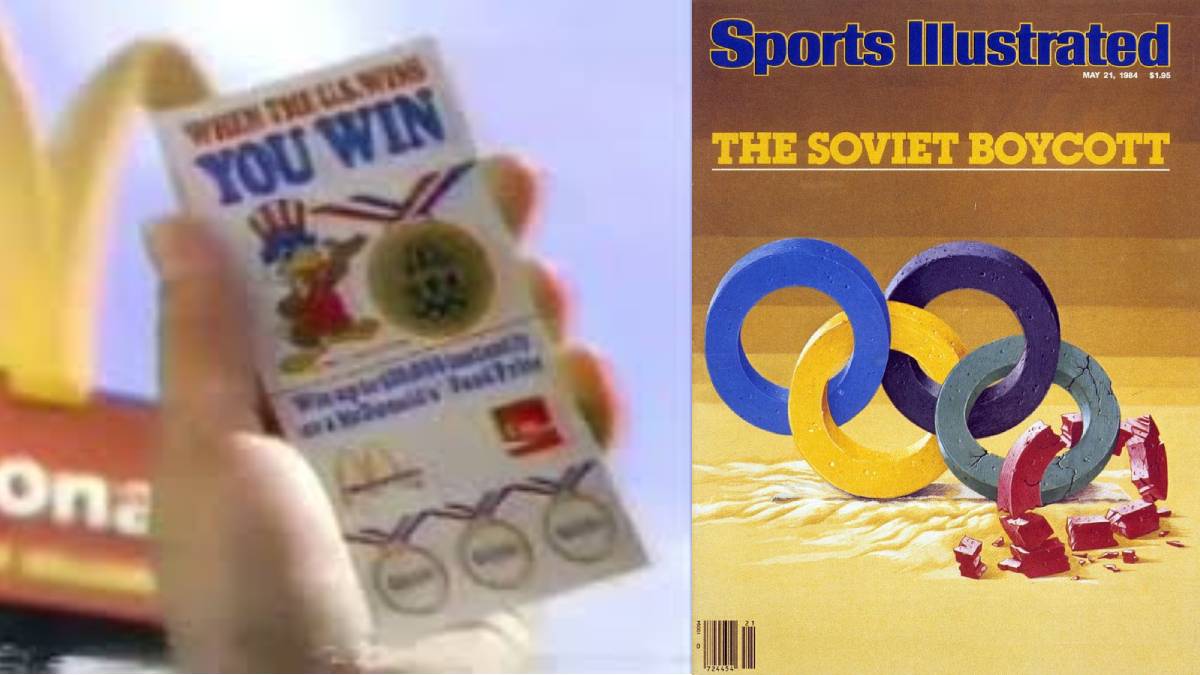
Despite the interesting juxtaposition of a fast food company and the greatest athletes on the planet, McDonald’s and the Olympic Games at one time had a longstanding affiliation. Starting in 1976, McDonald’s took part in the International Olympic Committee’s top sponsors program and committed nearly one billion dollars every four-year cycle up until the conclusion of their partnership in 2017.
With this sponsorship came McDonald’s ability to use the Olympics as a way to market their food to the masses. Starting with the first Olympics they sponsored, the 1976 Summer Games in Montréal, Quebec, Canada, McDonald’s created a giveaway promotion in their American restaurants. Customers were handed scratch-and-win cards that revealed specific Olympic events. If the United States medaled in the event found on customers’ cards, it would result in a redemption for free food. If the United States won gold, it would be a free Big Mac; if they won silver, it would be an order of french fries; if they won bronze, it would be a Coca-Cola.
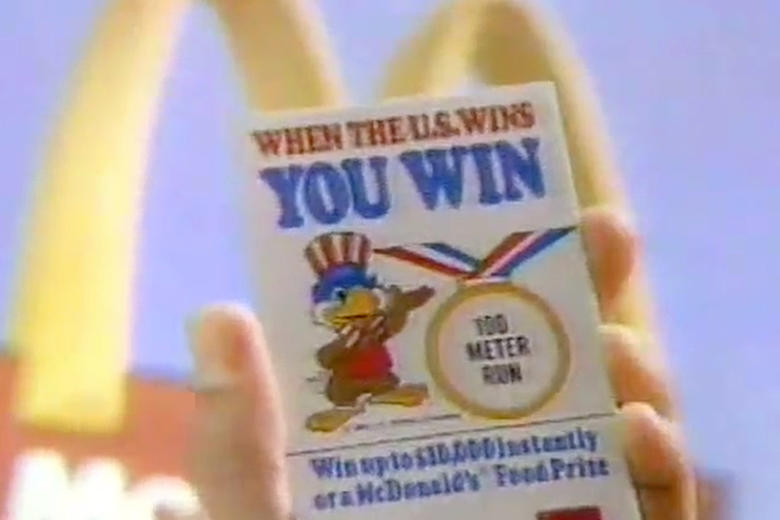
During the 1976 Olympics, the United States won 94 medals, including 34 gold medals. This became McDonald’s most successful promotion in the company’s history up to that point.
The campaign was not repeated in 1980 due to the United States boycotting the Summer Games that year in Moscow, Russia. They would make their return to the Summer Games in 1984, which was being hosted in Los Angeles, California. With an American city hosting, McDonald’s saw the opportunity to run this promotion again.
As the Summer Games approached, McDonald’s heavily pushed the slogan, “When the U.S. Wins, You Win.” Just like in 1976, American customers would receive scratch-and-win tickets with specific events. If the United States medaled in that event, it would equate to free food.
McDonald’s used the total medal count from 1976 as their basis for the allotted funds for the promotion. They were ready to capitalize on another competitive Olympics.
What McDonald’s didn’t account for was another boycott. This time, it would be from the Soviet Union.
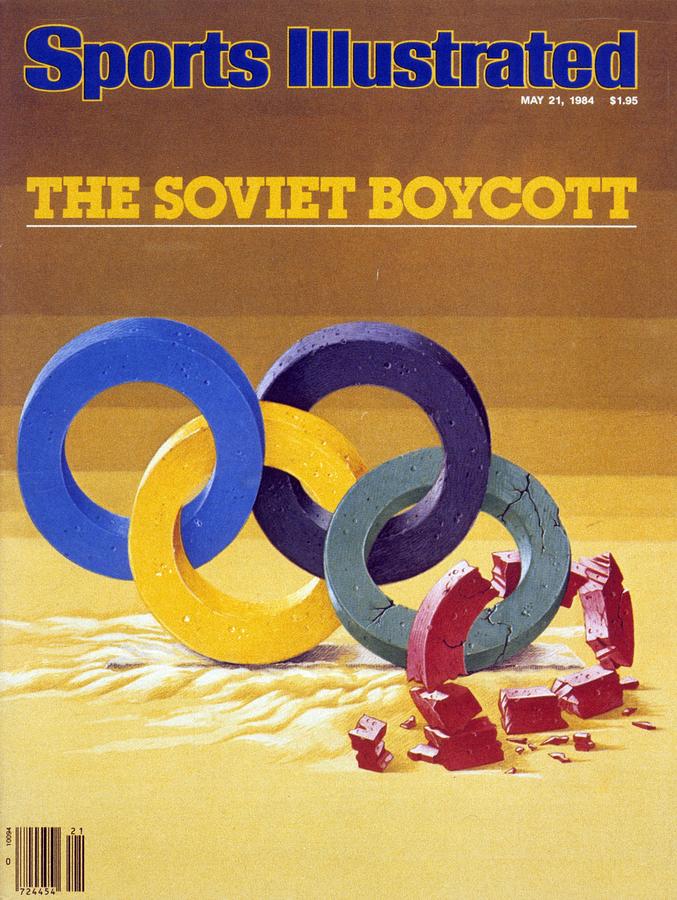
When the 1984 Olympic Games came about, the United States and the Soviet Union were still locked in the Cold War. Not only were they each other’s political rivals, but they were the two strongest countries in the Olympics. When the United States boycotted the 1980 Summer Olympics, the Soviet Union took advantage. In 1976, the Soviets won 125 medals, including 49 gold medals. In 1980, without the United States, they won 195 medals, including 80 gold medals.
In response to the United States boycotting the Summer Olympics in 1980, the Soviet Union did the same in 1984, along with the 13 Eastern Bloc countries. In addition, Iran and Libya also declined to compete in the 1984 Summer Games for other reasons.
Much like the Soviet Union in 1980, the United States thrived with their biggest adversaries not competing in 1984. They would conclude the Summer Games with 174 medals: 83 gold, 61 silver, and 30 bronze. This nearly doubled their medal count from 1976.
Scratch-and-win cards continued to be handed out as the Olympics progressed. As the Americans kept taking spots on the podium, more and more enthusiastic customers were redeeming their cards for free food. It was reported that around 6,600 McDonald’s locations suffered food shortages during the summer of 1984 with the Big Mac being the menu item most often selling out.
McDonald’s never shared publicly how much of a financial hit they took from the 1984 “When the U.S. Wins, You Win” campaign, but they have said it was the most expensive promotion in the company’s history. It is believed McDonald’s losses were in the multiples of millions of dollars.
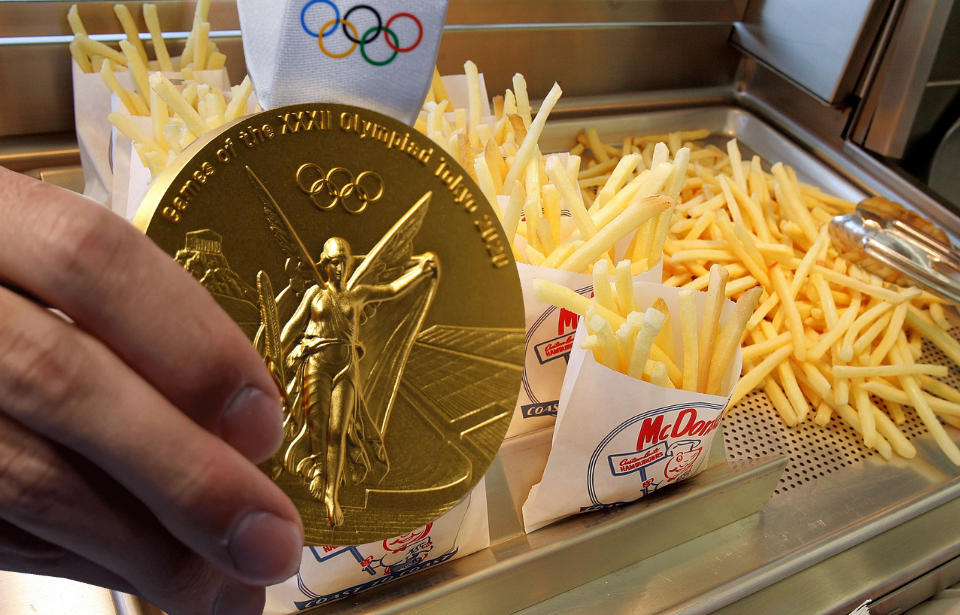
Despite this, McDonald’s would run the campaign twice more in 1988 and 1996.
McDonald’s “When the U.S. Wins, You Win” campaign has continued to live in cultural lore. It has been referenced and spoofed in pop culture many times. The most famous example was in The Simpsons‘ season four episode, “Lisa’s First Word.” In a flashback to 1984, Krusty Burger, owned and operated by Krusty the Clown, was running its own version of the “When the U.S. Wins, You Win” promotion. Unbeknownst to the public, the company rigged the scratch-and-win cards with Olympic events that favored Soviet athletes. With the boycott, a disgruntled Krusty would later reveal Krusty Burger suffered a loss of 44 million dollars.
Do you know of an interesting sports story you’d like to see written in the blog? Go to the contact page, and let us know about the story. We’re always interested in hearing about new odd sports stories!
 Odd Sports Stories